
Even if you’re unfamiliar with nonsurgical cosmetic procedures, you’ve probably heard of BOTOX injections. According to the American Society of Plastic Surgeons, 4.7 million botulinum toxin procedures were performed in the U.S — a 6% increase from the prior year, and the #1 nonsurgical cosmetic treatment by a wide margin (read the report here). To put its popularity into perspective, BOTOX has been the #1 cosmetic procedure performed by plastic surgeons for two decades. With so many BOTOX injections performed, it shouldn’t come as a surprise to learn that it’s both safe and effective. But what exactly are BOTOX injections?
Overview of BOTOX Injections
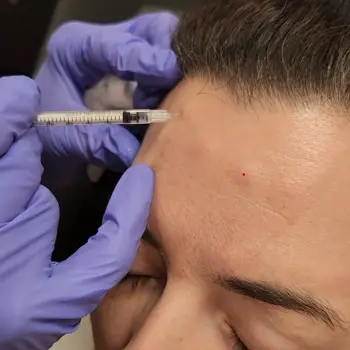
A BOTOX injection is a nonsurgical cosmetic procedure that involves the injection of a botulinum toxin (BTX) to temporarily minimize the appearance of wrinkles and fine lines. BTX itself is produced by a specific type of bacteria known as Clostridium botulinum. When injected into skin or muscle tissue, BTX inhibits the transmission of neurological signals to the local muscle tissue. As a result, the targeted muscle tissue reverts back to its natural relaxed state.
BOTOX has origins dating back to the 1970s, during which a doctor practicing in San Francisco, California developed the injections when researching ways to treat strabismus. Strabismus is a medical condition characterized by the misalignment of the eyes. In other words, it’s a form of cross eyes in which a person’s eyes look in different directions. The doctor discovered that by purifying BTX and injecting it into the eye muscles, he was able to treat strabismus.
In 1987, the drug company Allergan, Inc. purchased the rights to BOTOX. Soon after the acquisition of this innovative new drug, Allergan began marketing BOTOX for the treatment of strabismus as well as other muscle disorders like blepharospasm. It wasn’t long until the medical community pioneered other applications for BOTOX. Today, BOTOX injections remain the single most commonly performed cosmetic procedure performed in the United States.
What Are BOTOX Injections Used For?
BOTOX injections have several useful applications, the most common of which is to reduce the appearance of wrinkles and fine lines in the face. The formation of wrinkles and fine lines is a regular occurrence with age. As we grow older, our skin loses some of its natural elasticity. Over time, this lack of elasticity may prevent contracted muscles from relaxing, thereby creating the appearance of wrinkles and fine lines. BOTOX injections, however, offer a safe and effective way to treat facial wrinkles and fine lines.
Since its inception back in the 1970s, BOTOX has been approved by the U.S. Food and Drug Administration (FDA) to treat the following conditions:
- Strabismus
- Blepharospasm
- Cervical dystonia
- Crow’s feet
- Incontinence
- Chronic migraines
- Lip spasticity
- Excessive sweating
- Glabellar lines
How Do BOTOX Injections Treat Wrinkles and Fine Lines?
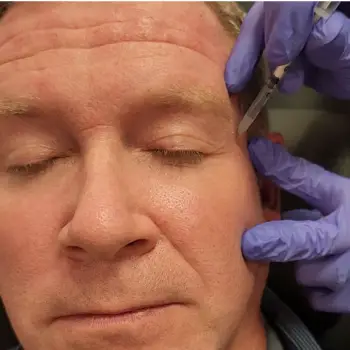
BTX is a neurotoxin that disrupts neurological signals. Our muscles are designed to contract in response to signals sent by the connected nerves. When you contract a muscle, your nerves tell the respective muscle to contract. BTX — the compound used in BOTOX injections — works by temporarily blocking these neurological signals so that your facial muscles will revert back to a relaxed state.
Wrinkles and fine lines are often the result of muscles stuck in a contracted state. If you squint your eyes, for example, wrinkles may form around the outer edges of your eyes — a condition known as crow’s feet. Relaxing your eye muscles, on the other hand, should make the wrinkles disappear. But sometimes muscles will remain in a contracted state for a prolonged period. Unless the contracted muscle or muscles relax, they may create the appearance of wrinkles or fine lines.
With BOTOX injections, however, you can force the contracted muscle or muscles to relax. The purified BTX solution temporarily blocks the transmission of signals from your nerves to the local muscle tissue. And without the appropriate neurological signals, the targeted muscle tissue will no longer contract. Instead, it will revert back to its relaxed state, resulting in smoother skin with fewer wrinkles and fine lines.
It’s important to note that BOTOX isn’t a permanent solution for wrinkles and fine lines. Over time, its effects will diminish. With that said, BOTOX injections usually last for about three to six months, during which you’ll benefit from smoother skin with fewer wrinkles and fine lines. Even after the effects have worn off, you can always schedule a followup procedure for BOTOX injections to achieve similar results. Alternatively, there are other filler injections available, such as Dysport and Xeomin, that can yield similar effects.
Are BOTOX Injections Safe?
Being that BTX is classified as a neurotoxin, some people assume that BOTOX injections are dangerous and carry a high risk of complications. You can rest assured, however, knowing that BOTOX injections are safe. The procedure has been around for decades, and during that time, it’s been performed millions of times in the United States alone. If BOTOX injections were dangerous or otherwise harmful, it wouldn’t be ranked as the country’s #1 cosmetic procedure.
BOTOX injections only affect local muscle tissue, meaning it won’t cause other muscles in your body to relax. Only the muscles in which the BTX solution is injected will relax. The hundreds of other muscles in your body won’t be affected by BOTOX. Unless BTX is injected into a particular muscle, it won’t be affected.
BOTOX has also been approved by the FDA, which is another key indication that it’s both safe and effective. The FDA performs extensive research to decide whether to approve procedures. Unless a procedure is both safe and effective, it won’t hold up to the FDA’s requirements. BOTOX first received FDA approval for the treatment of glabellar lines, and since then, it’s been approved by the FDA for eight other conditions.
Granted, you may experience some minor side effects during and shortly after receiving BOTOX injections, including localized bruising and numbness, but they should subside over the course of the following two weeks. Regardless, BOTOX is a safe procedure that doesn’t require incisions. It’s considered a minimally invasive cosmetic procedure that only requires injections via a small and thin needle.
Beyond the Forehead
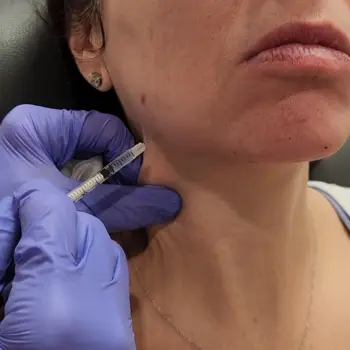
Botox does more than smooth wrinkles. Targeted placement in the lower face can lift the corners of the mouth, soften chin dimpling, slim the jawline, and reduce neck bands. These are the areas most providers skip, and where an experienced injector’s judgment shows. We wrote a full breakdown of lower face neurotoxin strategy here.
Radiance’s injectors have decades of combined experience and see these nuances every day. The goal isn’t a frozen look. It’s your face, just noticeably well-rested.
What to Expect When You Come in for Botox
Reading about Botox is one thing. Knowing what the actual appointment looks like is what moves most people from “I’ll think about it” to “I’m ready.”
At Radiance, you sit down with the injector who’ll do the treatment. Not a patient coordinator, not a salesperson. She reviews your concerns, looks at your facial anatomy, and builds a plan around what she sees. If Botox isn’t the right fit, she’ll say so.
A typical treatment takes 15–20 minutes. The most common areas are forehead lines, crow’s feet, and the “11s” between your brows, usually calling for 20–60 units total depending on your muscle activity and goals. Many people treat all three zones in a single visit.
You won’t feel much. The needles are small, and most areas barely register. You’ll leave looking like yourself. No visible downtime, no redness that keeps you from going back to your day.
Results start showing within 3–5 days and settle fully around 2 weeks. They typically last 3–4 months. If this is your first time, your injector will start conservative. It’s always easier to add a few units at a follow-up than to overdo it on the first visit.
Want to learn more about BOTOX injections? Check out our Botox treatment or schedule a complimentary consultation today!